A patio door should work with the way you use the room. Show us where the dining table sits, how you carry things outside, and which side you want to open onto the yard.
Design your patio door
Choose an exterior finish to match your siding, then switch to the interior to see how a color or woodgrain looks from the room.
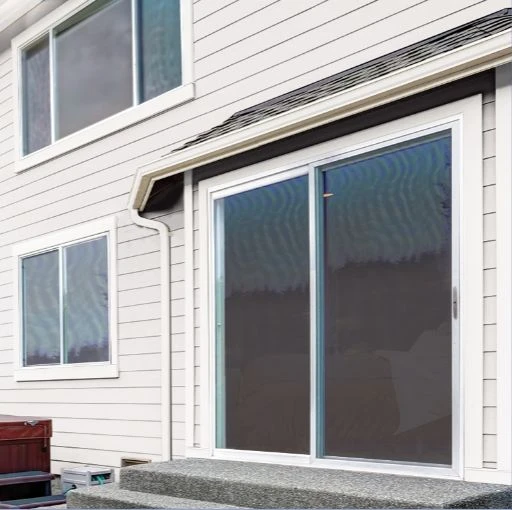
Patio door finishes
Screen colors are approximate. We’ll bring finish samples to your estimate so you can compare them at home.
Get a quote for this patio door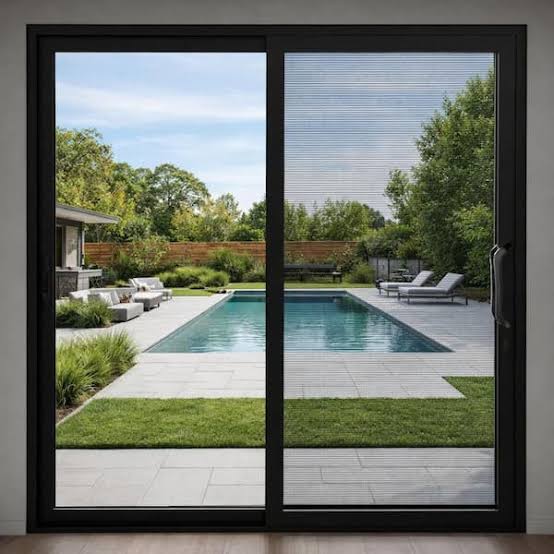
Energy efficiency across a wall of glass
On a patio door, glass makes up much of the opening. An insulated glass unit uses a sealed space between panes to slow heat transfer. A Low-E coating helps control radiant heat while letting daylight into the room.
Match the glass to the exposure. For a chilly dining area, compare whole-door U-factors. Lower numbers mean better insulation. If that same room gets hot in late afternoon, compare the solar heat gain coefficient too. A lower SHGC admits less of the sun’s heat.
Check the meeting rail. The moving panel should close squarely against the jamb and meet the fixed panel evenly. Correct roller and latch adjustment helps the weatherstripping seal along those edges.
Compare the view and the opening
Frame width, glass area and the location of the moving panel all affect the finished opening. If you already have a slider, tell us what is easy to use and what you would change.
Look closely at the everyday details
Try the handle and lock. Ask about screen options, care of the track and how the threshold meets the flooring inside and the landing outside.